You Won’t Believe What Atlanta’s Skyline Hides – My Cityscape Adventure
Atlanta isn’t just skyscrapers and traffic—you gotta see it to believe it. I hit the streets with no plan, just my camera and curiosity, and stumbled on views that blew my mind. From rooftop vibes to hidden downtown corners, the city’s pulse lives in its skyline. This is real, raw, and absolutely stunning. If you think you know Atlanta, think again—what I found changed how I see urban beauty forever.
First Impressions: Stepping Into Atlanta’s Urban Rhythm
Arriving in Atlanta feels like stepping into a living rhythm, one that pulses beneath polished glass and rustling oak leaves. The first thing you notice isn’t just the skyline’s sharp verticals cutting into the sky, but the way the city breathes—green spaces woven between steel and stone, the hum of conversation drifting from sidewalk cafés, and the warm Southern drawl that softens the urban buzz. Unlike other major U.S. cities where density can feel overwhelming, Atlanta strikes a rare balance: modern high-rises rise proudly, yet they coexist with tree-lined boulevards and pockets of quiet charm. This contrast is what makes the cityscape so compelling. It doesn’t shout; it whispers stories of growth, resilience, and layered identity.
The sensory experience begins the moment you step off the MARTA train or exit a ride-share. The air carries a mix of freshly brewed coffee, blooming magnolias in spring, and the faint tang of city asphalt warmed by the sun. The skyline unfolds gradually—no single dramatic reveal, but a mosaic that builds as you move through neighborhoods. Downtown’s core announces itself with clusters of glass towers reflecting shifting clouds, while Midtown offers a sleeker, more refined silhouette. Yet even in the busiest districts, the Southern soul of Atlanta lingers—in the smile of a passerby, the design of a historic facade, or the quiet dignity of a century-old church nestled between new developments.
What sets Atlanta apart from other metropolitan areas is its intentional integration of nature and history within the urban framework. While cities like Chicago or New York are celebrated for their architectural boldness, Atlanta distinguishes itself with green density. It’s often called the “city in a forest” for good reason: nearly half of its land area is covered in tree canopy, softening the skyline’s edges and creating a visual harmony rarely seen in major urban centers. This blend of modernity and organic warmth gives the cityscape a human scale, making it not just impressive, but inviting.
For visitors, the initial impression often defies expectations. Many arrive anticipating a fast-paced, corporate-driven environment, only to discover a city that values pace, space, and personal connection. The skyline, then, becomes more than a backdrop—it’s a reflection of Atlanta’s identity: progressive yet grounded, ambitious yet welcoming. Whether you’re standing at the base of a towering office complex or strolling through a quiet residential street shaded by oaks, the city invites you to look closer, to listen, and to feel the rhythm beneath the surface.
The Heartbeat of Downtown: Where History Meets Modernity
Downtown Atlanta is where the city’s past and future converge in full view. Walking its streets is like flipping through the pages of a living history book, one where each chapter is written in brick, steel, and glass. The area pulses with energy, yet it carries a quiet reverence for its roots. Here, century-old buildings stand shoulder to shoulder with sleek high-rises, creating a skyline that tells a story of evolution, not erasure. The Flatiron Building, one of the city’s oldest standing structures, rises with a dignified grace, its terra-cotta facade a testament to early 20th-century craftsmanship. Just steps away, modern towers with reflective surfaces mirror the sky, symbolizing Atlanta’s forward momentum.
Centennial Olympic Park serves as the emotional and physical centerpiece of downtown, a wide-open green space created for the 1996 Summer Olympics that remains a hub of activity. From this vantage point, the skyline unfolds in all directions—north toward Midtown’s cluster of towers, south toward the Georgia World Congress Center, and east toward the historic neighborhoods that slope gently upward. The park itself frames the cityscape beautifully, offering unobstructed views that change with the light. At sunrise, the buildings glow in soft gold; by midday, they shimmer under a clear blue sky; and at dusk, their windows ignite in a patchwork of warm interior lights.
Another powerful perspective comes from the grounds of the Georgia State Capitol, perched on a hill that provides a natural elevation for panoramic views. The neoclassical dome stands as a symbol of civic pride, while the surrounding skyline illustrates the city’s growth beyond government into commerce, culture, and innovation. Standing here, one can trace the arc of Atlanta’s development—from a railroad hub to a global city—simply by observing the layers of architecture stretching into the distance.
For the best experience, timing is key. Early mornings offer the clearest air and softest light, ideal for photography and quiet reflection. Weekday mornings before 10 a.m. tend to be less crowded, allowing for peaceful exploration. Late afternoon, particularly in the golden hour just before sunset, transforms the skyline into a canvas of warm hues and long shadows—perfect for capturing the city’s atmospheric depth. Visitors are encouraged to wear comfortable shoes, carry water, and allow time to simply pause and absorb the surroundings. Downtown is best experienced not as a checklist of sights, but as a sensory journey through time and space.
Rooftop Culture: Elevated Views and Evening Vibes
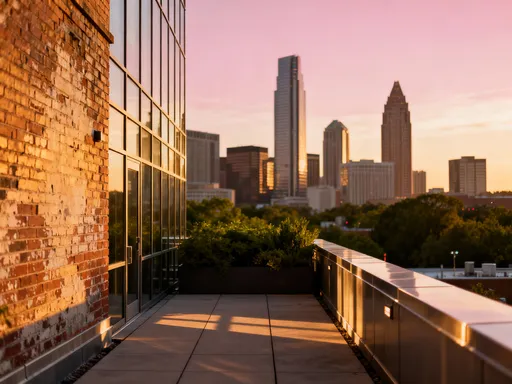
One of the most transformative ways to experience Atlanta’s skyline is from above—and the city’s rooftop culture delivers this in unforgettable style. Perched atop downtown and Midtown buildings, rooftop venues offer more than just drinks and socializing; they provide a vertical perspective that redefines the urban landscape. As the sun dips below the horizon, the skyline undergoes a magical shift. Office lights flicker on, streetlamps bloom into golden lines, and the city transitions from day’s productivity to night’s quiet energy. From these elevated vantage points, Atlanta reveals its soul—not in isolation, but in connection, each building a node in a vast, glowing network.
Downtown hotspots, whether upscale lounges or casual sky decks, share a common trait: they celebrate the view as much as the experience. Seated with a craft cocktail in hand, you’re not just observing the city—you’re part of its rhythm. The air cools, the music blends with distant city sounds, and the skyline stretches in every direction, framed by subtle lighting and open railings. What makes these moments emotionally resonant is the sense of intimacy amidst grandeur. You’re high above the streets, yet you feel close to the city’s heartbeat.
The visual uniqueness of Atlanta’s skyline from above lies in its balance of density and openness. Unlike cities with tightly packed skylines, Atlanta’s towers are spaced with intention, allowing views to breathe. You can see from Bankhead to Decatur, from Perimeter to the heart of the city, with green corridors like the BeltLine and Piedmont Park creating natural breaks in the urban fabric. At night, these parks appear as dark silhouettes, their tree canopies absorbing light and offering contrast to the illuminated corridors of commerce and residence.
For visitors, the rooftop experience is not just about luxury—it’s about perspective. It invites contemplation. Watching the city light up, you begin to appreciate the layers of life unfolding below: a delivery truck navigating a side street, a couple walking hand in hand along a lit path, the distant hum of a train. These quiet moments, visible only from above, remind us that a skyline is more than architecture—it’s a living, breathing entity shaped by the people within it. To visit Atlanta without experiencing its elevated views is to see only half the story.
Hidden Perspectives: Off-the-Beaten-Path Viewpoints
Beyond the curated experiences of rooftop bars and tourist overlooks lie the city’s best-kept secrets—unofficial vantage points that offer raw, unfiltered views of the skyline. These are the places not marked on maps, known mostly to locals and observant wanderers. A quiet corner of a parking garage on Luckie Street, for instance, can provide a stunning framed view of the Westin Peachtree and the surrounding towers, especially at twilight. The upper levels of public garages, often overlooked, serve as accidental observation decks, accessible to anyone willing to park and walk up a flight or two.
Another hidden gem is the pedestrian bridge near the Five Points MARTA station, where the convergence of rail lines creates an industrial yet poetic setting. From here, the skyline rises in layers, with trains gliding beneath like veins feeding the city’s core. It’s a dynamic view—ever-changing with the movement of transit—and one that captures Atlanta’s essence as a hub of connection and motion. Similarly, quiet side streets in neighborhoods like Castleberry Hill or Old Fourth Ward offer unexpected sightlines, where historic homes and graffiti art frame modern towers in striking contrast.
One of the most memorable moments of my exploration came from a simple detour. Wandering without direction, I found myself in a small pocket park tucked between two office buildings. Surrounded by benches and flowering crepe myrtles, I sat as the sun set behind the skyline. There were no crowds, no music, just the soft rustle of leaves and the distant echo of city life. In that stillness, the city felt personal, almost private. It was a reminder that beauty often lies in the unplanned, the unadvertised, the overlooked.
For travelers seeking such moments, the key is curiosity and respect. Explore on foot, stay aware of your surroundings, and always observe posted signage. Many of these viewpoints are on public or semi-public property, but they should be enjoyed without disruption. Carry a camera, but also take time to simply look. Some of the most powerful views require no lens—just presence. By venturing beyond the obvious, you don’t just see Atlanta differently; you begin to feel it.
Green Spaces Within the Gray: How Parks Shape the Skyline
What truly defines Atlanta’s skyline is not just its buildings, but the green spaces that cradle them. Parks are not afterthoughts here—they are integral to the city’s visual and emotional landscape. Piedmont Park, a sprawling 200-acre oasis in Midtown, is perhaps the most iconic example. From its rolling hills and tree-lined paths, the skyline emerges like a natural extension of the terrain. Skyscrapers rise beyond the canopy, framed by oaks and pines, creating a harmony between urban and wild that feels both intentional and effortless.
The BeltLine, a transformative urban redevelopment project, further illustrates this balance. Once a network of disused railway corridors, it has been reimagined as a continuous loop of trails, parks, and public art. As you walk or bike along its paths, the skyline appears in fragments—peeks between trees, reflections in puddles, silhouettes against the evening sky. This segmented view adds mystery and depth, making the city feel like a story unfolding in chapters rather than a single, static image.
These green spaces do more than enhance aesthetics—they contribute to the city’s well-being. Studies have shown that access to urban parks reduces stress, improves air quality, and fosters community connection. In Atlanta, where summer heat can be intense, parks offer cool refuge, both physically and mentally. Families picnic under shade trees, joggers trace winding paths, and artists sketch the skyline from quiet benches. Each of these moments adds life to the landscape, turning the skyline into a backdrop for human experience.
From a design perspective, the integration of nature into the cityscape is a masterstroke. It prevents visual fatigue, offering the eye places to rest amid the verticality. It also creates dynamic framing opportunities—imagine the West Tower reflected in a rain puddle, bordered by fallen leaves, or the Bank of America Plaza rising behind a canopy of fall foliage. These natural frames make the skyline feel alive, seasonal, and deeply rooted in place. For visitors, spending time in Atlanta’s parks is not a detour from the city—it’s a deeper way of seeing it.
Movement Through the City: Transportation as a Lens
How you move through Atlanta shapes how you see it. The city reveals itself differently depending on your mode of travel, each offering a unique lens on the skyline. Riding the MARTA rail system, for instance, provides a rhythmic, ground-level narrative. As the train glides above ground on elevated tracks, the skyline unfolds in motion—buildings sliding into view, then receding, creating a cinematic experience. The contrast between underground tunnels and open-air stretches mirrors the city’s duality: hidden depths and open ambition.
Ride-shares and taxis offer a more fluid perspective, allowing you to trace the city’s contours at street level. A drive through Midtown at dusk, with headlights tracing the curves of 10th Street, turns the skyline into a living light show. Reflections dance on glass facades, crosswalk signals pulse in time with pedestrian flow, and the city’s energy feels immediate and immersive. Unlike static viewpoints, movement reveals scale—how far the city stretches, how neighborhoods transition, and how light clusters in commercial hubs before fading into residential calm.
Walking, however, remains the most intimate way to experience Atlanta’s cityscape. On foot, you notice details: the texture of brickwork, the sound of a distant fountain, the way sunlight filters through a canopy of leaves onto a sidewalk café. A stroll from Peachtree Center to the Fox Theatre, for example, takes you through layers of history and design, each block offering a new composition of old and new. Pedestrian bridges, alleyways, and hidden plazas become discoveries, not destinations.
For those seeking scenic routes, a few stand out. The MARTA Gold Line from Airport to Five Points offers a gradual immersion into the city, with skyline views emerging as you approach downtown. A bike ride along the Eastside Trail of the BeltLine combines greenery, art, and skyline glimpses in one fluid journey. Even a simple walk from a parking garage to a downtown hotel can yield unexpected moments—a sudden view of the skyline through a gap in buildings, or the way shadows lengthen across a plaza at sunset. Movement, in all its forms, reminds us that a city is not a postcard, but a living, breathing entity in constant motion.
Why Atlanta’s Cityscape Stays With You
What makes Atlanta’s skyline unforgettable isn’t just its height or its lights, but the way it makes you feel. It’s a skyline that doesn’t dominate, but converses—with nature, with history, with the people who walk beneath it. It speaks of resilience, having risen from the ashes of war and rebuilt with vision and determination. It reflects growth, not just in square footage, but in spirit, embracing innovation while honoring tradition. And it embodies Southern innovation—a quiet confidence that doesn’t need to shout to be seen.
For many visitors, the skyline becomes a mirror. Standing before it, you might find yourself reflecting on your own journey, your own pace of life, your connection to place. There’s a stillness in the midst of the urban buzz, a space for personal clarity. The best views, as I’ve learned, often come when you’re not looking for them—when you’ve wandered off the map, sat on a quiet bench, or paused mid-step to watch the light change.
Atlanta teaches us that beauty in a city isn’t found only in grand monuments or famous landmarks. It’s in the balance—the green among the gray, the old beside the new, the quiet within the noise. It’s in the way a skyline can feel both vast and intimate, impressive and approachable. To explore Atlanta is to learn to see differently, to move with curiosity, and to embrace the unexpected.
So the next time you visit a city, don’t just follow the guidebooks. Look up, walk further, and let the skyline surprise you. Because sometimes, the most breathtaking views aren’t the ones you plan—they’re the ones that find you.