Lost in the Marble Streets of Ephesus? Here’s Where to Wander Next
Have you ever walked through a city where every stone tells a story? Ephesus, Turkey isn’t just about ancient ruins—it’s a living map of districts, each with its own rhythm. From the grand Library of Celsus to quiet hillside neighborhoods, I’ll guide you through the layers beyond the postcard sights. This is more than a tour—it’s how to feel the city, one district at a time. Ephesus was once a thriving metropolis, a center of commerce, culture, and faith in the ancient world. Today, its marble streets echo with the footsteps of millions who have wandered here across two millennia. Yet, to see it only as a relic is to miss its soul. Beneath the monumental facades lies a mosaic of human life that continues to unfold, connecting past and present in quiet, powerful ways.
The Soul Beyond the Ruins
Ephesus is often introduced as one of the best-preserved classical cities in the Eastern Mediterranean, and for good reason. Its grand theater, towering temples, and colonnaded streets draw visitors from every corner of the globe. But what truly distinguishes Ephesus is not just its scale or preservation—it’s the way its urban fabric reveals centuries of layered existence. This was not merely a ceremonial city built for spectacle; it was a place where people lived, worked, argued, celebrated, and raised families. The ruins we walk through today were once pulsing with the rhythms of daily life.
Exploring Ephesus district by district allows travelers to move beyond the curated highlights and into a deeper understanding of how ancient urban life functioned. Each neighborhood served a distinct purpose—residential, religious, commercial, administrative—and their spatial arrangement reflects a sophisticated understanding of city planning. The grid-like design, sloped terraces, and engineered drainage systems speak to a society that valued order, hygiene, and aesthetic harmony.
Moreover, visiting these districts fosters a sense of continuity. The same hills that sheltered elite homes in antiquity now overlook gardens tended by local families. The path once trodden by Roman senators is now walked by schoolchildren on field trips. This living connection makes Ephesus not a frozen monument, but a dynamic testament to human endurance and adaptation. By venturing into its less-photographed corners, travelers gain insight not only into history but into the enduring nature of community and place.
The Heartbeat of Hadrian’s Gate: A District of Daily Life and Ancient Echoes
Near the entrance to the main archaeological zone stands Hadrian’s Gate, a beautifully preserved arch dedicated to the Roman Emperor Hadrian in the 2nd century AD. More than just an ornamental threshold, this structure marks the boundary between the ancient city and the modern experience of it. Just beyond the gate, the atmosphere shifts subtly. The polished stones of the ancient city meet the worn pavement of a working neighborhood where life unfolds at a gentle pace.
This district hums with quiet vitality. Small family-run shops line the side streets, selling bottled water, traditional Turkish delight, and hand-carved souvenirs. A few steps away, a local café brews strong tea in tulip-shaped glasses, serving both tourists and townspeople who stop by for a morning chat. Children ride bicycles past weathered stone walls that once formed part of Roman villas. Here, antiquity is not behind glass—it is part of the landscape, woven into everyday routines.
What makes this area particularly special is its accessibility and authenticity. Unlike the more heavily touristed sections of Ephesus, this neighborhood does not feel performative. There are no staged reenactments or crowded souvenir stalls. Instead, visitors encounter real life—mothers hanging laundry on balconies above ancient foundations, bakers pulling fresh simit from wood-fired ovens, and elders sitting on stone benches beneath fig trees. This blend of old and new offers a rare opportunity to witness how history and modernity coexist in harmony.
For travelers, a pause in this district is more than a rest stop—it’s a chance to recalibrate. After walking through the grandeur of the marble streets, sitting in a local café with a cup of çay (Turkish tea) grounds the experience. It transforms the visit from a passive observation into an active engagement with place. The echoes of Roman life are still present, but so too are the voices of today, creating a layered narrative that deepens the journey.
Curetes Street: Where Pilgrims, Merchants, and Tourists Once Walked
One of the most iconic thoroughfares in Ephesus, Curetes Street—also known as the Street of the Curetes—was the city’s central artery during the Roman period. Stretching from the Magnesia Gate to the Temple of Hadrian, this marble-paved road connected residential, religious, and commercial zones. Its name may derive from a priestly class associated with the cult of Cybele, though the exact origin remains debated among scholars. What is certain is that this street was a corridor of movement and meaning.
Imagine Curetes Street in its prime: shaded by colonnades, lined with shops and shrines, alive with the sounds of merchants calling out their wares, priests in ceremonial robes, and pilgrims making their way to the Temple of Artemis—one of the Seven Wonders of the Ancient World. Statues of gods and emperors watched over the passersby, while underground passages carried fresh water and removed waste, a testament to advanced urban engineering.
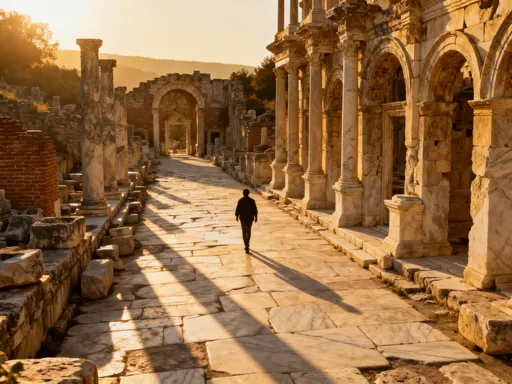
Today, walking along Curetes Street offers a powerful sense of continuity. The same stones that bore the weight of Roman sandals now carry the steps of modern travelers. The columns that once supported marble roofs still stand, many restored to their former height, casting long shadows in the afternoon sun. Along the way, inscriptions in Greek and Latin hint at the city’s cosmopolitan past, while restored fountains and niches suggest where daily rituals once took place.
For the thoughtful visitor, timing is key. To fully appreciate the street’s atmosphere without the press of crowds, arriving early in the morning—shortly after opening—is ideal. The light is soft, the air is cool, and the site feels more intimate. Alternatively, visiting in the late afternoon offers golden-hour illumination, casting a warm glow on the marble and creating a serene, almost meditative ambiance. Either way, taking the time to walk slowly, pause at side paths, and observe the details—carved reliefs, worn footprints, ancient graffiti—adds depth to the experience.
Terrace Houses: Glimpses into Elite Ancient Living
Perched on the southern slope of Panayır Dağı (Mount Coressus), the Terrace Houses represent one of the most remarkable residential complexes ever uncovered in the ancient world. Often referred to as the “Villas of the Rich,” these multi-level homes belonged to Ephesus’s upper class—merchants, officials, and possibly even members of the imperial administration. Excavated and partially restored, they offer an unparalleled window into domestic life during the 1st to 3rd centuries AD.
What sets these houses apart is their architectural sophistication. Built into the hillside, they feature terraced levels connected by staircases and colonnaded walkways. Each home includes multiple rooms arranged around central courtyards, with private baths, kitchens, and latrines. But it is the interior decoration that truly captivates: vibrant frescoes in red, yellow, and blue still cling to the walls, depicting mythological scenes, floral motifs, and geometric patterns. Some rooms even retain their original stucco ceilings, intricately molded with rosettes and garlands.
Equally impressive is the advanced technology embedded in these homes. Many featured hypocaust systems—underfloor heating powered by furnaces—allowing residents to enjoy warmth during colder months. Sophisticated water channels brought fresh water into private cisterns, while drainage systems carried waste away efficiently. These innovations reflect not only wealth but also a high standard of living and a deep appreciation for comfort and aesthetics.
For modern visitors, the Terrace Houses challenge the notion that ancient life was primitive. On the contrary, the elites of Ephesus enjoyed a level of domestic luxury comparable to many modern homes. Walking through these spaces—protected by modern roofing to preserve the delicate frescoes—feels like stepping into a private world frozen in time. It is a rare opportunity to see how the other half lived, far from the public squares and temples that dominate most archaeological tours.
The Upper Town: Off-the-Beaten-Path Serenity
Above the main ruins of Ephesus, the city climbs into quieter, less-visited territory known as the Upper Town. This elevated district, once home to more modest residences and religious retreats, offers a different kind of experience—one defined by solitude, sweeping views, and a sense of discovery. While most guided tours focus on the lower city, those who venture upward are rewarded with panoramic vistas of the surrounding valley and the Aegean coast in the distance.
The path to the Upper Town is not always clearly marked, and the terrain can be uneven, but the effort is worthwhile. Scattered among the olive trees and wild thyme are fragments of ancient walls, forgotten cisterns, and the foundations of small shrines. These remnants suggest a more decentralized, intimate form of urban life—one less concerned with grandeur and more attuned to the rhythms of nature and community.
One of the most peaceful spots in this area is the Church of Mary, a 5th-century Byzantine basilica believed to be the site of the Third Ecumenical Council in 431 AD. Though partially in ruins, its apse and columns still stand, offering a quiet place for reflection. Nearby, a small chapel dedicated to St. Thecla adds to the spiritual atmosphere, drawing pilgrims and contemplative travelers alike.
Exploring the Upper Town requires preparation. Sturdy footwear is essential, as the paths can be rocky and slippery, especially after rain. Sun protection, water, and a map—or GPS-enabled device—are recommended, as signage is limited. Most importantly, visitors should approach this area with respect. These are not theme-park ruins but sacred, historical spaces that deserve care. Avoid climbing on unstable walls or removing stones, and stay on designated paths to preserve the site for future generations.
Modern Selçuk: The Living Counterpart to Ancient Glory
At the foot of the Ephesus hills lies the modern town of Selçuk, a modest yet vibrant community that serves as the gateway to the ancient city. With a population of around 40,000, Selçuk is more than just a tourist base—it is a living, breathing town where traditions endure and daily life unfolds with warmth and rhythm. Staying here, rather than in distant resort towns, allows visitors to experience the region more authentically.
Selçuk offers several key historical and cultural sites of its own. The Basilica of St. John, built in the 6th century atop what is believed to be the apostle’s burial site, stands as a testament to Ephesus’s early Christian significance. Though damaged by earthquakes and time, its massive columns and central dome still inspire awe. Nearby, the İsa Bey Mosque, constructed in 1375, showcases Seljuk architecture with its intricate stone carvings and elegant courtyard. Together, these structures reflect the layers of religious history that have shaped the region.
Equally compelling are Selçuk’s local markets and eateries. The weekly market, held every Thursday, fills the town square with vendors selling fresh produce, herbs, cheeses, and handmade textiles. It’s a place to taste local flavors—ripe figs, olives from nearby groves, and gözleme, a savory flatbread cooked on a griddle. Family-run restaurants offer home-style Anatolian cuisine, often prepared with ingredients sourced from the surrounding countryside.
For travelers, choosing to stay in Selçuk enhances the entire Ephesus experience. Waking up to the call to prayer, shopping for breakfast at a neighborhood bakery, or chatting with a shopkeeper who remembers your name—these small moments create a deeper connection to place. They remind us that history is not confined to ruins; it lives on in the people, food, and customs of today.
Practical Pathways: Navigating Districts with Purpose and Ease
Exploring Ephesus district by district requires thoughtful planning, especially given the site’s size and the Mediterranean climate. The archaeological park spans over a mile from north to south, with significant elevation changes. To make the most of the visit, travelers should consider both timing and route.
One effective strategy is to begin at the upper entrance near the Temple of Hadrian and walk downhill toward the Great Theater. This route minimizes physical strain and allows for a natural progression through the city’s layout. Starting early—ideally between 8:00 and 9:00 AM—helps avoid both the midday heat and the largest tour groups. Alternatively, visiting in the late afternoon offers cooler temperatures and softer light, ideal for photography and quiet reflection.
Transportation to and within the site is straightforward. Selçuk is well-connected by public buses, and taxis are readily available. Many hotels offer shuttle services to the Ephesus entrance. Once inside, the entire site is accessible on foot, though comfortable, non-slip footwear is essential. Sandals with good support or hiking shoes are recommended, especially for those planning to explore the Upper Town or Terrace Houses.
Hydration is critical, particularly in summer months when temperatures can exceed 35°C (95°F). Visitors should carry at least one liter of water and take breaks in shaded areas. Sunscreen, a wide-brimmed hat, and a lightweight scarf or shawl for sun protection are also advisable. While food and drink are available at kiosks near the main entrances, bringing snacks ensures energy levels remain steady throughout the visit.
For families or travelers with limited mobility, it’s worth noting that some areas—particularly the Upper Town and the steep sections of Curetes Street—can be challenging. However, the core archaeological path is generally well-maintained and manageable for most fitness levels. Wheelchair access is limited but improving, with some paved sections and viewing platforms.
Finally, respectful tourism is essential. Visitors should refrain from touching frescoes or climbing on fragile ruins. Littering is not only discouraged but illegal, and designated bins are available throughout the site. By traveling with care and awareness, we help preserve Ephesus for future generations.
Conclusion: Seeing Ephesus as a Living City, Not Just a Ruin
Ephesus is more than an archaeological treasure—it is a living city in the truest sense. Its stones are not silent; they speak of empires risen and fallen, of markets and homes, of faith and family. To walk its streets is to participate in a continuum of human experience that stretches across two thousand years. The grand Library of Celsus, the quiet Terrace Houses, the bustling modern town of Selçuk—all are threads in the same enduring tapestry.
The true value of visiting Ephesus lies not in checking a destination off a list, but in slowing down, looking closely, and listening. It is in noticing the way sunlight hits a fresco, the sound of wind through ancient columns, or the smile of a local vendor offering a fig. These moments transform sightseeing into connection.
As travelers, we have the privilege—and responsibility—to explore with curiosity and care. By venturing beyond the postcard views, by respecting the past and engaging with the present, we honor the full story of Ephesus. Let this ancient city remind us that places, like people, have depth, memory, and soul. And sometimes, all it takes is a single step off the main path to discover where history still lives.