You Won’t Believe These Hidden Markets in N’Djamena—Pure Photographic Gold
N’Djamena, Chad, isn’t your typical tourist hotspot—but that’s exactly what makes it unforgettable. As a photographer, I was drawn to its raw, unfiltered energy. Forget polished souvenirs; here, shopping is alive with color, texture, and story. From bustling central markets to quiet craft corners, every stall feels like a portrait waiting to be taken. This city doesn’t perform for cameras—it lives. And that authenticity? It’s pure magic through the lens. In a world where many destinations feel curated for Instagram, N’Djamena offers something rare: unscripted humanity. Its markets aren’t staged for visitors; they pulse with daily life, where commerce, culture, and community converge in vivid harmony. For those willing to look beyond the surface, the capital of Chad reveals itself as a treasure trove of photographic potential, rich with moments that speak not just to the eye, but to the soul.
Why N’Djamena Surprised Me as a Photographer
When I first arrived in N’Djamena, I didn’t expect to fall in love with its visual rhythm. The city greeted me with dusty streets, a skyline of low-rise buildings, and an atmosphere of quiet resilience. There were no crowds of tourists, no guided photo walks, and certainly no influencer backdrops. Instead, I found a place that moved at its own pace—deliberate, grounded, and deeply authentic. It was this lack of performance that struck me most. People weren’t posing for cameras; they were living, working, bargaining, and laughing in the heat of the day. The beauty wasn’t in grand monuments or manicured plazas—it was in the details: a woman adjusting a stack of woven baskets on her head, children darting between stalls with handmade toys, the glint of sunlight on brass scales used for weighing spices.
What surprised me most was how quickly the markets became my primary subject. I hadn’t planned to focus on commerce, but the energy was irresistible. Each market radiated a different frequency—some loud and chaotic, others calm and deliberate. I began to notice patterns: the way light fell across fabric at different hours, the intricate hand gestures used during bargaining, the vibrant dyes used on textiles that seemed to glow even under the harsh midday sun. These weren’t just scenes; they were stories unfolding in real time. As a photographer, I realized I wasn’t just capturing images—I was documenting a way of life that remains largely unseen by the outside world.
The absence of tourist infrastructure, often seen as a drawback, became an unexpected advantage. Without the usual filters, I was able to engage more directly with the environment. Vendors didn’t treat me as another passerby with a camera; they saw curiosity, and sometimes, after a brief conversation or a small purchase, they welcomed my lens. This organic connection transformed my approach. Instead of chasing the perfect shot, I learned to wait, to observe, and to let moments reveal themselves. N’Djamena taught me that the most powerful photographs aren’t always the most colorful or dramatic—they’re the ones that carry presence, dignity, and truth.
Grand Market (Marché Central): The Heartbeat of the City
At the core of N’Djamena’s commercial life lies the Grand Market, locally known as Marché Central. This sprawling network of covered alleys and open-air stalls functions as the city’s economic and social nucleus. Located near the Chari River, it draws people from across the capital and beyond, creating a daily convergence of cultures, languages, and traditions. To walk through its pathways is to experience sensory immersion at its most intense. The air hums with conversation, the scent of grilled meat mingles with dried fish and fresh mangoes, and the ground is a mosaic of packed earth, scattered straw, and the occasional puddle from spilled water.
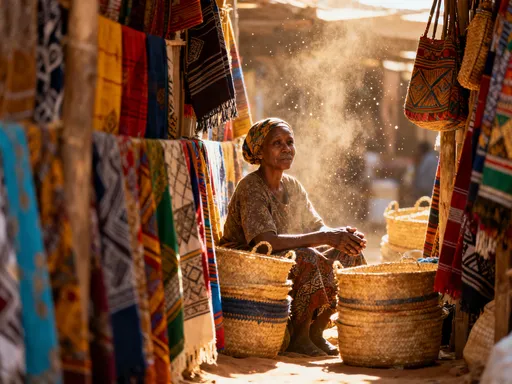
The visual abundance is staggering. Bolts of Sudanese cloth in deep reds, electric yellows, and indigo blues hang like tapestries from wooden frames. Stalls overflow with spices—cumin, ginger, and chili powder—piled in mounds that resemble miniature dunes. Women in brightly patterned dresses crouch beside baskets of okra and sorghum, while men in flowing boubous negotiate prices with quiet intensity. The market doesn’t operate on fixed pricing; bargaining is a ritual, a dance of words and gestures that unfolds with patience and respect. For photographers, this constant interaction provides endless opportunities for candid storytelling.
Timing is crucial when photographing Marché Central. The early morning hours, just after sunrise, offer the best light. The sun rises behind the canvas awnings, casting long, soft beams that slice through the dust-filled air, illuminating faces and textures with a golden glow. By midday, the light becomes harsh and direct, creating deep shadows and blown-out highlights—challenging conditions for handheld shooting. However, with the right technique, even the brightest hours can yield compelling images. Using a wide aperture, such as f/2.8 or f/4, allows photographers to isolate subjects from the chaotic background, turning a crowded scene into a focused portrait. A prime lens like a 50mm works exceptionally well here, offering sharp detail and natural perspective.
What makes Marché Central truly special is its rhythm. There’s no rush, no artificial urgency. Transactions unfold slowly, often accompanied by laughter or shared stories. A vendor might pause to greet a neighbor, or a customer might linger to taste a sample of dried mango before making a purchase. These pauses, these quiet interludes within the bustle, are where the most authentic moments live. As a photographer, I found that slowing down—matching the market’s pace—led to more meaningful connections and, ultimately, more powerful images.
What Makes These Markets Visually Unique?
The visual language of N’Djamena’s markets is unlike any other I’ve encountered. It’s not just the colors or the scale—it’s the way tradition and modernity coexist in unexpected harmony. At one end of a stall, you might see a pile of hand-ground spices stored in repurposed plastic containers; at the other, a vendor uses a mobile money kiosk to complete a transaction. This blend of old and new creates a layered aesthetic, one that reflects the city’s evolving identity. The markets are not frozen in time; they are dynamic spaces where heritage adapts to contemporary life.
Texture is another defining feature. Every surface tells a story. Woven baskets show the imprint of their maker’s hands, their fibers worn smooth in places from years of use. Leather goods—sandals, bags, and belts—bear the marks of hand-stitching and natural tanning, their surfaces cracked and uneven in the most beautiful way. Textiles, often dyed using traditional methods, display subtle variations in color that machine-made fabrics can’t replicate. These imperfections aren’t flaws—they’re signatures of craftsmanship, evidence of human touch in an increasingly automated world.
Lighting presents both a challenge and an opportunity. The sun in N’Djamena is intense, casting sharp contrasts between light and shadow. Direct overhead light can flatten details and wash out colors, but when used creatively, it enhances depth and dimension. I learned to position myself so that subjects were partially shaded—under a canvas roof or beside a fabric awning—allowing the sunlight to graze their features without overpowering them. Reflectors, even makeshift ones like white cardboard, can help soften shadows on faces. For digital shooters, shooting in RAW format is essential, as it preserves detail in both highlights and shadows, allowing for greater flexibility in post-processing.
Composition in these markets requires intention. The temptation is to capture everything at once—the colors, the movement, the chaos. But the most compelling images often come from restraint. Focusing on a single element—a hand holding a spice-laden spoon, a child’s feet beside a pile of secondhand shoes, the reflection of a market sign in a puddle—can convey more than a wide-angle panorama. These details anchor the viewer in the moment, offering a quieter, more intimate perspective on a vibrant scene.
Smaller Markets with Big Character: Marché Sabo and Marché Arab
While Marché Central dominates in size and scale, N’Djamena’s smaller markets offer equally rich photographic opportunities. Two stand out for their distinct character: Marché Sabo and Marché Arab. Each caters to different needs and communities, creating unique visual and cultural landscapes. These markets tend to have less foot traffic than the central hub, making them ideal for photographers seeking more controlled, intimate compositions.
Marché Sabo, located in a residential neighborhood, is renowned for its secondhand clothing—locally known as “mitumba.” Stalls overflow with garments sorted by type and size: men’s shirts piled high, children’s dresses folded neatly, and shoes arranged in uneven rows. What fascinates me most is how these imported clothes are transformed. Local tailors work on-site, altering pieces to fit traditional styles or adding embroidery and embellishments. Watching a tailor at work—needle in hand, fabric spread across a wooden table—offers a powerful narrative of adaptation and creativity. The market’s color palette is more muted than Marché Central, dominated by faded denim and pastel cottons, but this restraint makes the occasional bright scarf or hand-painted label stand out even more.
Marché Arab, on the other hand, pulses with North African influence. Incense coils smolder in corners, releasing fragrant plumes of myrrh and frankincense. Beads of every size and color—amber, coral, turquoise—are strung into necklaces and displayed in glass cases. Handmade silver jewelry, often engraved with geometric patterns, catches the light with every movement. The vendors here speak Arabic and Chadian Arabic, and the market feels like a cultural bridge between Chad and its neighbors to the north. For photographers, the interplay of light and scent adds another sensory layer to the experience. A single shaft of sunlight hitting a string of beads can create a moment of unexpected brilliance.
Because these smaller markets attract fewer outsiders, they offer more opportunities for candid photography. People are less guarded, more absorbed in their daily routines. However, this also means greater responsibility. I always make it a point to ask permission before photographing vendors, especially in close-up portraits. A simple gesture, a smile, or a small purchase can open the door to genuine interaction. In many cases, vendors are happy to pose once rapport is established. Respecting cultural norms—dressing modestly, avoiding intrusive behavior—ensures that photography remains a positive exchange rather than an imposition.
The Art of Local Crafts: From Pottery to Leatherwork
One of the most rewarding aspects of photographing N’Djamena’s markets is witnessing the continuation of traditional crafts. In an age of mass production, these handmade goods stand as testaments to skill, patience, and cultural identity. Artisans work in open-air workshops, often just steps away from the main thoroughfares, shaping objects that serve both practical and symbolic purposes. Their presence reminds us that commerce here is not just about exchange—it’s about preservation.
Pottery, for example, is still crafted using age-old techniques. I watched a woman knead clay with her feet, mixing it with water and straw to achieve the right consistency. She then shaped it by hand, using a simple wooden paddle to smooth the surface. The pots, used for cooking, storing water, or serving tea, are fired in open pits, giving them a smoky, uneven finish that no kiln could replicate. Photographing this process requires attention to detail—the texture of the clay, the rhythm of her movements, the tools resting beside her. A macro lens can reveal the fine cracks and fingerprints that make each piece unique.
Leatherwork is another craft that thrives in N’Djamena. Artisans cut, stitch, and dye hides to create bags, sandals, and belts. The process is labor-intensive, often taking days to complete a single item. I was struck by the precision involved—how a craftsman would measure a strap with his hand, then cut it with a single, confident motion. The smell of tannin and oil lingers in the air, adding to the sensory authenticity of the scene. These goods aren’t made for tourists; they’re made for daily use, built to last. When photographing leatherworkers, I focus on their hands—their calluses, their concentration—as a way of honoring their skill.
Framing these crafts in a photograph means balancing context and detail. A wide shot might show the artisan in his workspace, surrounded by tools and half-finished products. A tighter frame could isolate the texture of a stitched seam or the reflection of light on a polished buckle. Ethical considerations are paramount. If a vendor requests payment for a portrait, I honor that request without hesitation. Photography should never exploit; it should acknowledge and respect. By supporting artisans through purchases or fair compensation for images, photographers contribute to the sustainability of these traditions.
Practical Tips for Photographers Shopping (and Shooting) in N’Djamena
For photographers planning to visit N’Djamena, preparation is key. The city’s climate and environment present unique challenges that require both technical readiness and cultural awareness. First and foremost, dress modestly. Loose, lightweight clothing in neutral colors helps you blend in and shows respect for local customs. Avoid wearing expensive jewelry or carrying flashy camera gear, as this can draw unwanted attention. A simple cross-body bag with a zipper is ideal for keeping essentials secure while navigating crowded areas.
Financially, it’s best to carry small denominations of the local currency, the Central African CFA franc. Many vendors don’t accept credit cards, and mobile money is still emerging. Having exact change speeds up transactions and builds goodwill. When shopping, even small purchases—a piece of fruit, a handmade bracelet—can open doors for conversation and photography. People are more likely to welcome your lens if they feel seen as individuals, not just subjects.
From a technical standpoint, the right equipment makes a significant difference. A 35mm or 50mm prime lens is ideal for market photography, offering a natural field of view and excellent low-light performance. These lenses allow you to move close to your subjects while maintaining context. A polarizing filter can help reduce glare on shiny surfaces, and a lens hood protects against dust and stray light. Given the heat and dry air, it’s wise to carry extra memory cards and batteries. Dust can infiltrate camera bodies, so changing lenses should be done sparingly and only in protected areas.
Finally, be mindful of your presence. Ask permission before photographing people, especially children and women. A smile and a gesture can go a long way. If someone declines, respect their decision without argument. Photography in places like N’Djamena isn’t just about capturing beauty—it’s about building trust, one interaction at a time.
Beyond the Lens: Connecting Through Commerce
What I’ve come to value most about photographing N’Djamena’s markets is how deeply they foster human connection. The act of shopping—simple, everyday commerce—became my primary pathway to conversation. A question about price led to a discussion about family. A compliment on a piece of jewelry turned into an invitation to see how it was made. These moments weren’t staged; they emerged naturally from mutual respect and curiosity. Through small exchanges, I gained insights that no guidebook could provide.
Buying something—anything—mattered more than I expected. It wasn’t about acquiring souvenirs; it was about participating. When I purchased a handwoven basket or a pair of leather sandals, I wasn’t just a visitor with a camera. I became part of the economy, part of the community, even if only briefly. Vendors remembered me, greeted me by name, and sometimes shared stories about their lives. This reciprocity transformed my photographs from observations into collaborations.
These images matter because they challenge stereotypes. N’Djamena is often portrayed through the lens of hardship or conflict, but its markets tell a different story—one of resilience, creativity, and joy. The women selling fabric, the men repairing shoes, the children helping their parents—each contributes to a vibrant tapestry of daily life. My photographs aim not to exoticize, but to honor. They show a city that is real, not romanticized; rich in culture, not in wealth.
Photographing N’Djamena’s shopping venues changed how I see travel imagery. It’s not about capturing perfection—it’s about honoring presence. These markets aren’t just places to buy things; they’re living galleries of human spirit. Every frame tells a story of survival, pride, and connection. If you ever go, don’t just look—see. And let the city reveal itself, one quiet moment at a time.