Through the Lens and Onto the Plate: Heidelberg’s Hidden Flavors
Ever wondered how a city’s soul shows up in both its sights and its bites? Wandering Heidelberg with my camera, I didn’t just capture cobbled alleys and castle views—I stumbled upon food moments that stole the show. The way light hits the Old Town at golden hour? Almost as warm as a fresh pretzel with Obatzda. This is where photography meets flavor, and every snap tells a taste story. In Heidelberg, beauty isn’t only framed by the Neckar River or the ivy-covered walls of the castle—it’s also served on chipped plates in family-run taverns, whispered in the sizzle of buttered Spätzle, and reflected in the steam rising from a morning cup of coffee in a sunlit café window. Here, seeing and savoring are not separate acts, but intertwined experiences that deepen the way we remember a place.
Framing Heidelberg: Where Photography Meets Passion
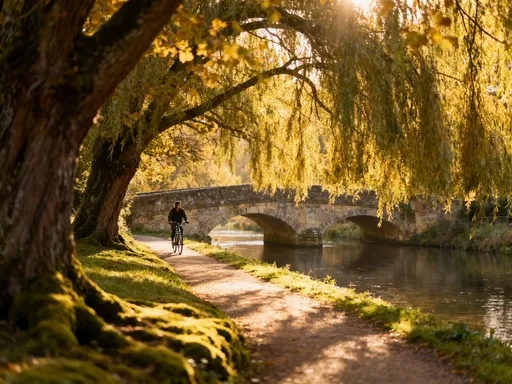
Heidelberg possesses a quiet magnetism that draws photographers not with grand spectacle, but with subtle, layered beauty. The city unfolds in quiet moments: the soft ripple of the Neckar River at dawn, the golden glow of sandstone buildings as morning light climbs the hills, the silhouette of the Alte Brücke framed by leafy plane trees. These are not just postcard scenes—they are invitations to slow down and observe. For the photographer, Heidelberg rewards patience and presence. A lightweight mirrorless camera with a prime lens—such as a 35mm or 50mm—allows for intuitive shooting, capturing both wide cityscapes and intimate details without drawing undue attention.
What makes Heidelberg uniquely photogenic is its rhythm of daily life. It’s not a city frozen for tourists; it breathes with students, shopkeepers, and families going about their routines. This authenticity is visible in small gestures: a bookseller arranging volumes in a secondhand shop window, a street musician tuning a cello near the Church of the Holy Spirit, a barista pouring latte art in a quiet corner café. These are the moments that define the city’s visual language. Photographing them requires more than technical skill—it demands empathy. The best shots emerge not from staged poses, but from watching, waiting, and connecting.
The act of photographing Heidelberg becomes a form of cultural immersion. When you raise your camera to frame a baker pulling a tray of rye bread from an old brick oven, you’re not just documenting food—you’re witnessing tradition. The textures of crusty loaves, the flour-dusted aprons, the warm glow from inside the bakery—all speak to a deeper story of craftsmanship and continuity. This visual storytelling sets the foundation for a richer travel experience, one that naturally extends from the lens to the palate. Seeing deeply prepares you to taste more mindfully.
The Alchemy of Light and Local Life
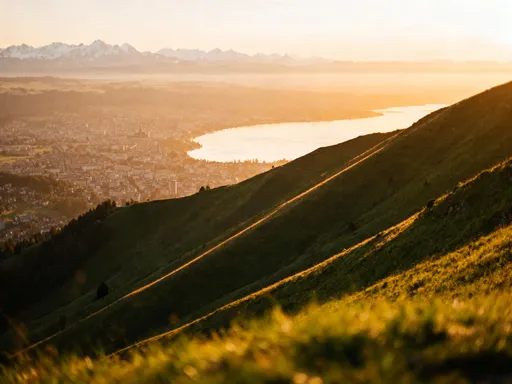
In Heidelberg, light is not just a photographer’s tool—it’s a daily ritual that shapes the city’s mood. The blue hour just before sunrise casts a silvery hush over the river, turning reflections into abstract paintings. By mid-morning, sunlight spills over the rooftops of the Altstadt, illuminating centuries-old facades in soft gold. At golden hour, the castle glows like embers, its ruins bathed in warmth. These shifts in light are not merely aesthetic—they mirror the rhythms of local life, particularly around food.
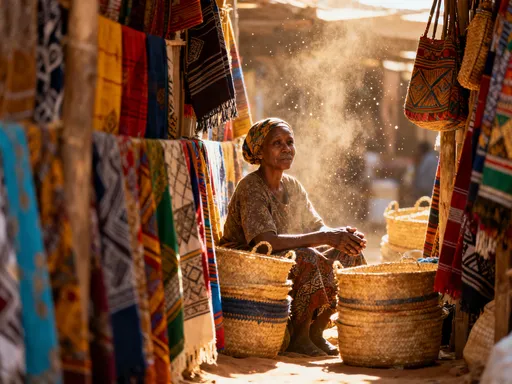
Consider the morning at the Marktplatz. Long before the tourists arrive, vendors set up stalls with precision and pride. A fishmonger arranges glistening trout on beds of ice, their silver scales catching the low light. A farmer displays baskets of just-picked apples, their skins still dewy from the orchard. Nearby, a baker pulls steaming rye loaves from a wood-fired oven, the scent curling through the cool air like an invisible thread. These are not performances—they are real, unscripted moments of sustenance and service. Capturing them requires stillness. The best photograph of a vendor laughing with a regular customer comes not from rushing in, but from standing quietly, letting trust build.
Photographers who linger begin to see how light enhances the textures of daily life. The glint of a knife slicing through soft cheese, the steam rising from a fresh cup of coffee, the shadow of a wicker basket on cobblestones—all become part of a visual narrative that is inseparable from flavor. A well-timed shot of an elderly couple sharing a slice of Streuselkuchen at a Konditorei table isn’t just about composition; it’s about witnessing joy, tradition, and connection. These fleeting instants, when preserved, become gateways to memory—and appetite.
What makes these scenes so powerful is their authenticity. In Heidelberg, food is not curated for Instagram. It is lived, shared, and deeply rooted in regional identity. The light that illuminates a sausage sizzling on a grill at a Wurstbude is the same light that falls on generations of families eating together at wooden tables. To photograph this is not to intrude, but to honor. With respectful distance and mindful framing, the camera becomes a bridge between observer and community, between seeing and understanding.
Behind the Lens, Behind the Menu: Culinary Culture in Focus
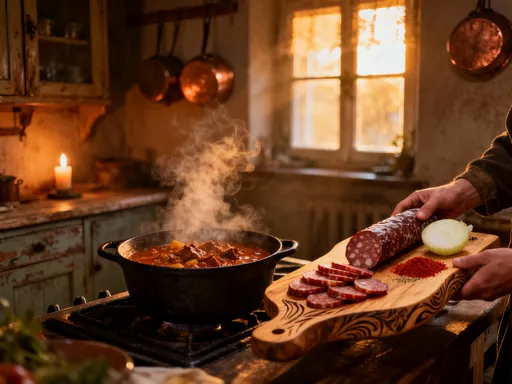
Heidelberg’s cuisine is an extension of its landscape—rooted in the fertile valleys of Baden-Württemberg, shaped by seasons, and passed down through generations. This is not a city of culinary trends, but of enduring traditions. The flavors here are hearty, honest, and deeply satisfying. Dishes like Maultaschen—often called “poor man’s belly” in Swabian dialect—are stuffed pasta parcels simmered in broth or pan-fried with onions. They are a testament to resourcefulness, born from a time when nothing was wasted. Spätzle, the region’s iconic egg noodle, is hand-scraped into boiling water, yielding tender, irregular strands that pair perfectly with rich sauces or roasted meats.
Equally central is Flädle soup, a humble yet soulful dish made from strips of fried pancake soaked in chicken broth. Served with a sprinkle of fresh parsley, it is comfort in a bowl—especially on a crisp autumn afternoon. These meals unfold slowly, often stretching over hours, accompanied by conversation, laughter, and glasses of local Apfelwein or wine. The pace is deliberate, inviting presence rather than haste. To eat in Heidelberg is to participate in a rhythm older than tourism.
The region’s wines further deepen the experience. Trollinger, a light red with soft tannins and red berry notes, is a local favorite, often served slightly chilled. Grauburgunder (Pinot Gris) offers a fuller, honeyed white that complements creamy cheeses and mushroom dishes. These wines are not afterthoughts—they are essential threads in the fabric of daily life, grown in vineyards that climb the hills just beyond the city. Many family-run Weinstuben serve their own vintages, poured with pride and paired with seasonal fare.
What connects photography and cuisine in Heidelberg is attention to detail. Just as a photographer studies contrast, texture, and composition, a diner learns to appreciate the crumb of a fresh pretzel, the sheen of melted Obatzda, the crunch of a perfectly seared sausage. In family-run inns, meals are often served on chipped porcelain or mismatched glassware—imperfections that add character. These are not flaws, but marks of use, of history, of love. To notice them is to see—and taste—more deeply.
Off the Beaten Frame: Photogenic Eats Beyond the Tourist Trail
While the castle and the Hauptstraße draw crowds, Heidelberg’s most authentic food moments happen just beyond the postcard views. One such place is the weekly farmers’ market in Bergheim, a quiet neighborhood just a short walk from the river. Here, local producers sell everything from wild mushrooms to artisanal goat cheese, their stalls arranged under striped awnings. The air hums with German dialects, the clink of jars, and the rustle of paper bags. This is where you’ll find hands kneading dough at a baker’s stand, smoke curling from a grill at a family-run Wurstbude, and aprons stained with flour and sauce—visual poetry in motion.
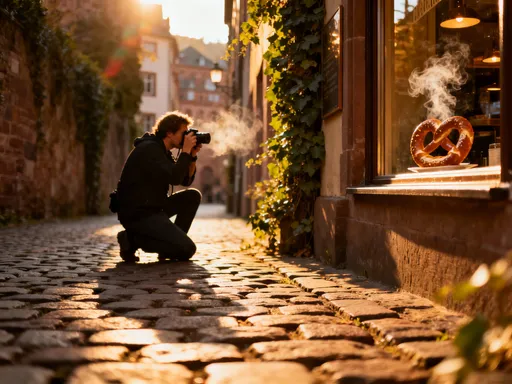
One hidden gem is a small Wurstbude known only to locals, tucked behind a quiet square near the Bergheim church. Its signature? A liverwurst sandwich on crusty rye, topped with sweet onion marmalade and a sprinkle of caraway. The vendor, a woman in her sixties with flour in her hair, has been serving the same recipe for over thirty years. Her stand has no sign, no menu—just a chalkboard and a smile. Photographing here requires discretion. A nod, a quiet “Darf ich ein Foto machen?” (May I take a photo?), and a small purchase go a long way. The resulting image—a close-up of the sandwich, glistening under morning light—is not just a food shot, but a portrait of continuity.
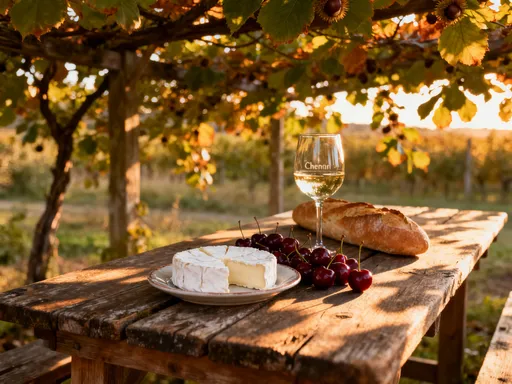
Another rewarding detour is a vineyard picnic along the Philosophenweg, the historic path once walked by scholars. Pack a simple spread—local cheese, a baguette, a bottle of Trollinger—and find a bench with a view of the city below. As the sun dips behind the hills, the light turns golden, illuminating the river and the rooftops. This is the perfect moment to capture not just the landscape, but the act of sharing a meal. The crumpled napkin, the half-empty wine glass, the laughter between friends—all become part of a visual story that is both personal and universal.
For photographers and food lovers alike, these off-the-beaten-path experiences offer richer narratives. They are slower, quieter, and more meaningful. Timing is key: mid-morning at the market, late afternoon on the Philosophenweg, or early evening at a neighborhood Weinstube. And always, respect is paramount. Ask before photographing people. Smile. Say thank you. These small gestures open doors—and appetites.
The Golden Hour Bite: When Light Meets Lunch
There is a magic in Heidelberg when the sun begins to set and the city glows in golden light. This is peak photography time—but it is also the perfect moment to pause and eat. The synergy between light and lunch is not accidental. After hours of wandering with a camera, the body craves warmth, flavor, and rest. And Heidelberg delivers. Imagine this: you’ve just captured the castle silhouette against a peach-colored sky. Your next stop? A riverside Weinstube with wooden beams, checkered tablecloths, and the smell of roasting meat in the air.
Here, you order a Platte mit Wurst und Käse—a generous board of cold cuts, pickles, and local cheeses. The plate arrives on thick stoneware, the Obatzda already softening from the warmth of the room. A glass of chilled Grauburgunder appears beside it. As you eat, the light outside shifts, painting the river in streaks of amber and rose. The atmosphere is relaxed, unhurried. This is not fast food—it is slow nourishment, meant to be savored.
The golden hour also lends itself to portable pleasures. Carry a paper cone of roasted chestnuts as you walk the Alte Brücke. The warmth seeps into your palms, the sweet, nutty scent rising with the steam. Or stop at a street vendor for a fresh pretzel, its crust crackling as you break it open. These simple foods, enjoyed in motion, become part of the photographic journey. A well-timed shot of a child blowing dandelion fluff near the bridge, a couple sharing a bite of pretzel, the reflection of streetlights on wet cobblestones after a brief rain—all are enhanced by the soft, warm light of late afternoon.
For travelers, combining photo walks with food breaks creates a balanced rhythm. Move, pause. Observe, taste. Capture, remember. This ebb and flow prevents fatigue and deepens engagement. Instead of rushing from one landmark to the next, you allow moments to unfold. A short walk to a hillside viewpoint, followed by a long lunch at a family-run Gasthaus, becomes a day well spent. The camera and the appetite work in harmony, each enriching the other.
Editing Your Journey: From Raw Files to Food Memories
After the trip, the journey continues—not on the streets of Heidelberg, but on your screen. Sorting through hundreds of photos, you begin to see patterns. Some shots are technically perfect: sharp focus, ideal exposure, balanced composition. Others are blurry, off-center, or overexposed. Yet, it is often the imperfect ones that stir the deepest memories. A slightly out-of-focus image of a shared meal at a Weinstube table. A close-up of a wine-stained napkin. A candid shot of a baker wiping flour from his brow. These are not just photos—they are sensory echoes.
Image curation mirrors the way we remember food. We don’t recall every dish in detail, but certain flavors linger—the tang of Obatzda, the sweetness of apple cake, the warmth of spiced cider. Similarly, certain photos stand out not for their technical excellence, but for the emotion they carry. A child laughing as she bites into a sugared pretzel. An elderly man raising a glass in a quiet toast. These moments, fleeting and unposed, become keepsakes.
Simple editing can enhance this emotional resonance without over-processing. Adjusting warmth to bring out golden tones, increasing contrast slightly to highlight textures, or cropping to emphasize a gesture—these small changes can deepen the mood. But restraint is key. Over-editing risks losing authenticity, just as over-plating a dish can overwhelm its essence. The goal is not perfection, but truth.
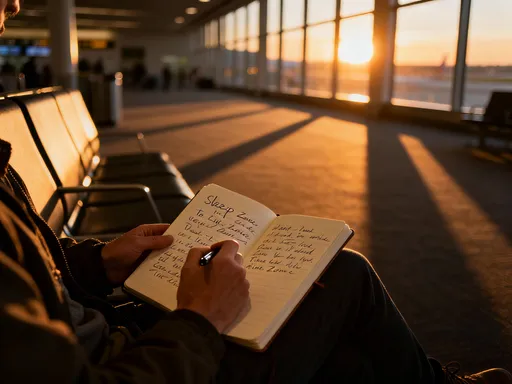
One meaningful practice is to pair your favorite photo with the dish it represents. Print the image, write the recipe or memory on the back, and store it in a travel journal. Over time, this collection becomes more than a record—it becomes a sensory archive. Years later, flipping through these pages, you won’t just see Heidelberg—you’ll taste it, smell it, feel it. The camera, in this way, becomes a vessel for memory, preserving not just what you saw, but what you experienced.
Why Heidelberg Stays in Focus
Heidelberg does not reveal itself all at once. Its magic lies not in checklists or landmarks, but in the quiet accumulation of moments—the way light falls on a stone wall, the sound of a cello drifting from a plaza, the warmth of a shared meal. Photography and cuisine, when practiced with intention, become twin lenses for understanding a place. They teach us to slow down, to look closely, to taste boldly. In a world that often values speed and spectacle, Heidelberg reminds us of the power of presence.
True travel depth comes from absorbing rhythms—how a city wakes, how meals unfold, how flavors linger long after the last bite. It comes from using the camera not as a shield between you and the world, but as a tool for deeper connection. When you photograph a vendor arranging trout at the market, you’re not just taking a picture—you’re honoring her craft. When you savor a slice of Streuselkuchen at a family-run Konditorei, you’re not just eating—you’re participating in tradition.
Heidelberg stays in focus because it invites full engagement. It asks you to use all your senses—to see the play of light on the river, to hear the clatter of dishes in a bustling Weinstube, to smell fresh bread at dawn, to feel the weight of a wine glass in your hand, to taste the richness of Spätzle with mushroom sauce. These experiences, layered and interconnected, create a travel memory that is not just visual, but visceral.
So, the next time you travel, consider this: slow down. Put away the checklist. Let your camera guide you not to monuments, but to moments. Let your appetite lead you beyond tourist menus to neighborhood markets and family tables. Look closely. Taste boldly. Because in the end, the places that stay with us are not the ones we merely see—but the ones we truly feel.