From Rigid Schedules to Effortless Flow: How Online Fitness Gave Me My Time Back
You know that feeling—when your day slips away before you’ve even lunched, and the gym? It’s just another guilt trip on your to-do list. I used to live like that, juggling work, chores, and *trying* to stay fit. Then I discovered online fitness courses—not as a workout trend, but as a quiet revolution in my daily rhythm. No more racing against the clock. Just movement that fits, energy that lasts, and time that finally feels like mine. It wasn’t a dramatic transformation overnight. There were no loud announcements or sudden six-pack abs. But slowly, something shifted. I stopped dreading my workouts. I started showing up—on my terms. And in doing so, I found not just better health, but more of what really matters: time, peace, and a sense of control in a world that rarely offers either.
The Clock That Never Stops: Living in a World of Fixed Schedules
Remember when life felt a little more... fluid? When you could squeeze in a walk after dinner or stretch on the living room floor without checking three calendars first? Most of us don’t live like that anymore. Instead, we’re trapped in a system that treats time like a rigid container—each hour packed, scheduled, and accounted for. Wake up. Get the kids dressed. Pack lunches. Answer emails. Fold laundry. Attend meetings. Make dinner. Repeat. And somewhere in the middle of all that, we’re supposed to “make time” for fitness—like it’s just another item we can casually slot in between grocery pickup and piano lessons.
The truth is, traditional fitness often adds to the pressure instead of relieving it. Think about it: you have to plan your outfit, drive across town, find parking, change in a crowded locker room, attend a class that starts at 6:15 sharp—what if the kids are late from practice? What if dinner burns? What if you’re just… too tired? By the time you get home, you’re not refreshed—you’re more drained than when you left. And the guilt creeps in. I should’ve gone. I’ll go tomorrow. But tomorrow looks just like today.
For years, I believed the only real workout was the one that happened outside my home, in a brightly lit studio with loud music and a trainer shouting cues. Anything less felt like cheating. I thought consistency meant showing up at the same place, same time, no matter what. But here’s what I’ve learned: that kind of rigidity doesn’t build discipline—it builds burnout. And for women in their 30s, 40s, and beyond, who are often the emotional and logistical anchors of their families, the cost of that burnout is especially high. We don’t need more rules. We need more room to breathe.
The Unexpected Turn: Discovering Online Fitness as a Lifestyle Shift
My way out didn’t come from motivation. It came from exhaustion. One rainy Tuesday, I sat on my couch in sweatpants, staring at my gym bag like it was a personal failure. I had canceled my evening class—again—because my youngest had a fever, and I couldn’t find a sitter. I felt defeated. Not just about fitness, but about everything. That’s when my sister texted me: “Try that 10-minute yoga flow I sent last week. Seriously. Just do it in your living room. No pressure.”
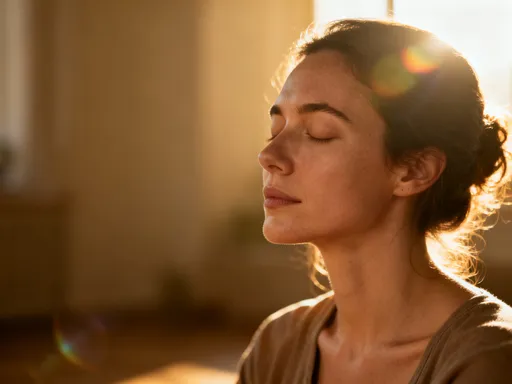
I clicked the link half-heartedly. Ten minutes. How bad could it be? The instructor’s voice was calm, not pushy. She didn’t care if my socks didn’t match or if my dog barked in the background. She just guided me through gentle movements—nothing intense, nothing intimidating. And when it was over, I didn’t feel sore. I felt… clearer. Lighter. Like I had finally exhaled.
That small moment sparked a shift. What if I didn’t have to choose between being a present mom, a responsible worker, and a woman who took care of herself? What if fitness didn’t have to be an all-or-nothing event? I started exploring more online courses—short strength sessions, guided breathing exercises, even 15-minute dance workouts I could do while waiting for the kettle to boil. No commute. No judgment. No schedule to match. Just me, my body, and a little screen.
This wasn’t about chasing a certain look or hitting a fitness milestone. It was about reclaiming a piece of my day that felt like mine. And for the first time in years, I wasn’t fighting against time—I was moving with it.
Flexibility That Feels Like Freedom: How Online Workouts Fit Any Moment
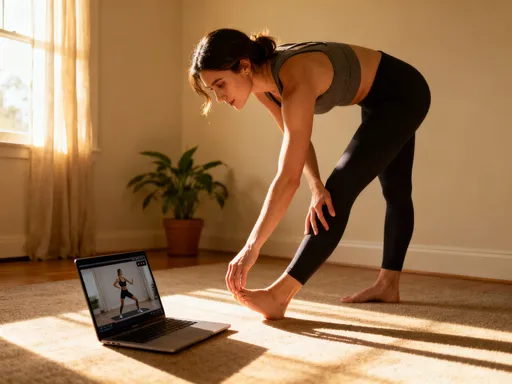
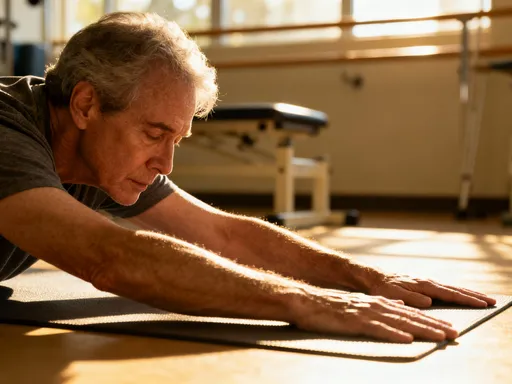
Here’s the magic of online fitness: it meets you where you are. Literally. You don’t have to rearrange your life to make it work. It works because it fits. I remember one morning, the kids were still asleep, and I had 12 minutes before the alarm went off. I rolled out my mat, clicked on a quick core and stretch routine, and moved in silence as the sun crept through the blinds. No one needed me for those 12 minutes. I was just… present. And it changed the entire tone of my day.
Or the day I had back-to-back Zoom calls and barely left my desk. At 1:00 PM, I felt stiff and foggy. Instead of reaching for another coffee, I opened a 10-minute mobility session on my tablet. I did seated twists, neck rolls, and a few standing lunges between meetings. My coworkers didn’t notice. But I did. I felt more alert, more grounded. That small reset gave me the energy to finish strong.
Evenings are different now too. Instead of collapsing on the couch with a glass of wine—don’t get me wrong, I still enjoy that sometimes—I sometimes choose a slow, restorative yoga flow. It’s not about burning calories. It’s about unwinding, releasing the tension I’ve carried all day, and preparing my body for real rest. My husband noticed. “You seem calmer lately,” he said. “Like you’re not carrying the weight of everything on your shoulders.” That’s when it hit me: this wasn’t just physical. It was emotional. Spiritual, even.
And the best part? I don’t have to explain myself to anyone. I don’t need permission. If I’m tired, I do less. If I’m energized, I go longer. If the baby’s crying, I pause and come back. There’s no guilt, no shame, no ticking clock. Just presence. And that kind of freedom? That’s priceless.
Time Management, Redefined: When Exercise Stops Being a Chore
We talk a lot about time management, but we rarely talk about the invisible costs of our routines. Driving to the gym takes 20 minutes. Changing clothes, showering, packing your bag—another 30. That’s nearly an hour, not counting the actual workout. And that’s on a good day. Now, add in the mental energy it takes to plan around traffic, remember your shoes, worry about being late. By the time you actually start moving, half your willpower is already spent.
Online fitness cuts through that noise. It removes the friction. You don’t have to decide when to leave, what to wear, or whether you have time. You just click play. That reduction in decision fatigue is huge—especially for women who make an average of 1,000 decisions a day just running a household. When something becomes that simple, consistency becomes possible. And consistency? That’s where real change happens.
I used to think I needed long, intense workouts to “count.” But science shows that short, regular movement is often more effective than sporadic, lengthy sessions. It keeps your metabolism active, improves circulation, and supports mental clarity. The key isn’t duration—it’s showing up. And when showing up means stepping onto a mat in your socks at 7:05 AM, you’re far more likely to do it.
What surprised me most was how this small shift affected everything else. Because I wasn’t dragging myself through the motions anymore, I had more mental space. I started planning meals earlier. I responded to emails with more patience. I even found time to read before bed. It wasn’t that my schedule changed—it was that my energy changed. And when you feel capable, you act capable.
The Ripple Effect: How Gained Time Transforms Your Days
Here’s what no one tells you about making time for yourself: it doesn’t take away from your family. It gives back to them. When I’m not running on empty, I’m more patient with my kids. I listen better. I laugh more. I’m not just physically present—I’m emotionally available. And that makes all the difference.
My daughter noticed. “Mom, you’re not yelling as much,” she said one afternoon. It broke my heart a little—but also filled it. I hadn’t realized how much my stress was spilling over until I saw the contrast. Taking care of myself wasn’t selfish. It was necessary. Like putting on your oxygen mask first so you can help others.
And it’s not just about relationships. My sleep improved. I fall asleep faster and wake up feeling more refreshed. My digestion settled. My skin looks clearer. These aren’t miracles—they’re side effects of reduced stress and consistent movement. When your body isn’t in constant fight-or-flight mode, it can actually heal, repair, and rebalance.
Even my work benefited. I used to hit a wall around 3:00 PM—brain fog, low energy, the urge to scroll mindlessly. Now, I do a quick 7-minute energy boost session: some jumping jacks, arm circles, and deep breathing. It’s like hitting a reset button. My focus returns. My creativity flows. I get more done in less time—without burning out.
This is the ripple effect: one small change creates waves you can’t always predict. You start with 10 minutes of movement. You end up with more patience, better sleep, sharper focus, and a deeper connection to the people you love. It’s not about perfection. It’s about progress—and how that progress quietly lifts every area of your life.
Making It Stick: Simple Strategies to Start Without Overthinking
If you’re thinking, This sounds great, but where do I even start?—I’ve been there. The good news? You don’t need a plan. You don’t need equipment. You don’t need hours. You just need a willingness to try.
First, pick a platform that feels welcoming—not overwhelming. Look for one with real instructors, clear instructions, and a variety of lengths and styles. Some days you’ll want to sweat. Others, you’ll just need to stretch and breathe. Having options helps you stay consistent because you can match the workout to your energy level, not the other way around.
Start small. Ten minutes. That’s less time than it takes to scroll through social media. Do it in your socks. Do it in your pajamas. Do it while the coffee brews. The goal isn’t intensity—it’s showing up. And when you show up consistently, even in tiny ways, your body and mind begin to trust the rhythm.
Use what you already have. Your living room floor. A kitchen counter for support. A chair for seated stretches. You don’t need a home gym. You don’t need fancy clothes. You just need space to move. And if the dog jumps on the mat or the baby crawls into frame? That’s not a disruption. That’s real life. And real life is exactly where this belongs.
Finally, pair it with something you already do. After you brush your teeth in the morning? Do a quick stretch. Before you start dinner? A five-minute mobility flow. These micro-moments add up. And over time, they become habits—not chores, not obligations, but natural parts of your day, like drinking water or checking the mail.
Be kind to yourself. Some days, you’ll miss it. That’s okay. The point isn’t perfection. It’s presence. And the more you practice being present with your body, the more you’ll carry that presence into the rest of your life.
More Than a Workout: Reclaiming Agency in a Demanding World
At the end of the day, online fitness isn’t just about physical health. It’s about reclaiming agency. It’s about saying, My time matters. My energy matters. I matter. In a world that constantly demands more from us—more time, more attention, more emotional labor—having a space where we can show up on our own terms is revolutionary.
Technology often gets blamed for stealing our time, pulling us away from what’s real. But when used with intention, it can do the opposite. It can give us back time. It can create space. It can help us reconnect—with our bodies, our breath, our inner strength. Online fitness, at its best, isn’t a replacement for real life. It’s a tool to live it more fully.
I no longer see my workouts as something I “have to do.” I see them as a gift I give myself. Some days, it’s a 20-minute strength session. Others, it’s three minutes of deep breathing before a tough conversation. The form doesn’t matter. The intention does. And that intention—to care for myself, to honor my energy, to move with grace—is what’s transformed my life.
If you’re feeling stretched thin, if your to-do list feels like a prison, if you’ve given up on fitness because it never fit—know this: it can. It can fit your life, your pace, your truth. You don’t have to change who you are to make it work. You just have to press play. And in that simple act, you begin to reclaim not just your time, but your peace, your power, and your joy—one flexible, beautiful moment at a time.